
27 May 2026
In today's international shipping landscape, independent freight forwarders face a contradictory challenge: while the world has never been more digitally connected, yet finding a reliable, trustworthy overseas partner has never been more difficult. As supply chains grow more complex, the hidden problem threatens the operational honesty of logistics providers of profound isolation. Forwarders are often left navigating volatile global markets alone, depending on unvetted digital directories or fragmented connections to move critical cargo.
The WTC Alliance's latest annual general meeting focused on this problem statement. The event was more than just a corporate formality; it was a necessary action against the systemic vulnerabilities that affect independent logistics providers. By examining the key topics discussed in last year’s AGM, we can understand exactly what freight forwarders gained from WTC Alliance AGM and how strategic unity is redefining the future of global trade.
To understand the value obtained from the WTC Alliance AGM, one must first dissect the underlying issue: the illusion of connectivity to the logistics sector. Over the last two decades, the internet democratized access to global contacts. A forwarder in Rotterdam can theoretically find an agent in Shenzhen in a matter of seconds. However, a name on a display does not equate to a reliable operational partner.
The main issue is a fundamental lack of deep, verified trust. When an independent forwarder hands over a shipment to the overseas agent, they are literally giving over their client's trust, their own reputation, and significant financial liability. The digital age filled the market with middlemen, suspicious brokers, and unproven entities pretending to be established local professionals. Furthermore, differences in financial security, differing cultural approaches to customer service, or opaque operational standards mean that a single bad partnership can cascade into a catastrophic failure.
According to recent studies on supply chain resilience by the World Trade Organization, systemic weaknesses are frequently made worse not by financial shifts, but by localized failures in last-mile coordination as well as agent reliability.
The effects of this divided ecosystem are severe for logistics providers. Operationally, the impact is seen as constant micromanagement. Instead of focusing on sales growth, business growth, or strategic planning, movers are forced to spend hours hunting down unresponsive agents, verifying documentation, and calming frustrated clients whose cargo has been delayed due to a partner's irresponsibility.
Financially, the effect is even more severe. Unreliable agents often resort to hidden fees, unexpected surcharges, or open mismanagement of funds. When a shipment is kept in a foreign port due to an agent's failure to clear customs properly, denials and detention charges accrue rapidly. Independent forwarders are frequently stuck in the middle, expected to absorb those expenses or pass them on to an already frustrated client, damaging profit margins.
Reputationally, damage is frequently irreversible. In international shipping, the client does not care about the complexities of the overseas agent; they only know the name of the forwarder that they hired. A single failed delivery may result in the loss of a major account, crippling small to mid-sized logistical business. Consequently, forwarders operate in a state of constant anxiety, knowing which growth is capped by the weakest link in their external network.
The industry has made efforts to solve this partnership deficit through various means, yet those common solutions consistently fall short of providing true safety.
Many forwarders turn to online freight matching platforms. However, these platforms prioritize transactional speed over relational depth. They often commoditize logistics services, dragging margins into the ground and pairing forwarders with partners based solely on the lowest bid rather than proven capability or similar ethical standards.
Attending a major, generic logistics conference may produce a stack of business cards, yet it rarely results in partnerships. At these sprawling events, everyone is selling, and few are genuinely listening. The sheer volume of attendees makes it difficult to conduct the deep due diligence required to establish mutual trusts.
Smaller, regional freight events often suffer from a lack of variety. A forwarder may meet local competitors or adjacent service suppliers, but they rarely gain access towards the high-quality, exclusive international agents necessary to build a full global logistics network.
The fatal flaw of all these solutions is the absence of rigorous vetting and structured relationship-building. Trust cannot be shared, nor can it be algorithmically generated. It requires face-to-face interaction, shared experiences, and, most importantly, a mutual commitment to accountability. This is precisely where the drawbacks of traditional networking end, and the unique value of the WTC Alliance begins.
The WTC Alliance operates on a fundamentally different paradigm. It recognizes that for independent freight forwarders to compete with multinational mega-carriers, they must band together, not loosely, but with a strong foundation. The latest AGM was the ultimate manifestation of this philosophy. Here is how WTCalliance provides the definitive solution to the industry's trust and connectivity crisis.
Unlike open-access directories, access into the WTCalliance network is predicated on careful due diligence. Learn more about our limited membership criteria and vetting process. At the annual general meeting, this shared standard of excellence was the main topic. Attendees gained access not just to contacts, to pre-vetted, financially stable, and operationally sound partners. Every agent in a room had already passed rigorous background checks, which means the foundational trust that takes years to build to the open market was established before the first handshake.
The WTC Alliance AGM isn't a traditional logistics conference; it is an operational incubator. During the event, forwarders participated in structured, one-on-one business matchmaking sessions. These aren't speed-dating activities, but deeply focused meetings aligned by trade path, cargo type, and strategic goals.
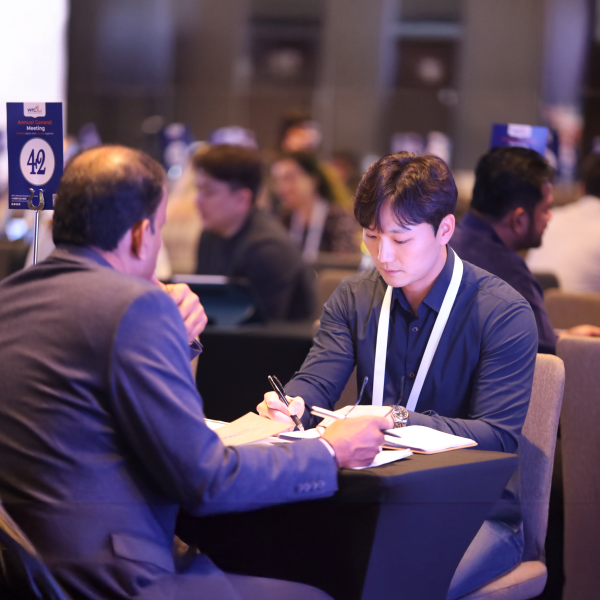
What freight forwarders gained from WTC Alliance's AGM was actionable intelligence. They learned about localized market conditions directly from the source, such as particular port congestion in Southeast Asia, shifting customs regulations in Europe, or new trade lanes in Latin America. This localized intelligence, shared peer-to-peer, allows forwarders to proactively advise their clients, raising their status from simple freight arrangers to indispensable strategic advisors.
The most significant takeaway to attendees was the tangible experience of being part of such a cohesive global logistics network. In an era where disruptions are the norm, be it geopolitical conflicts, pandemics, or canal blockages, having a resilient network is the only hedge against chaos.
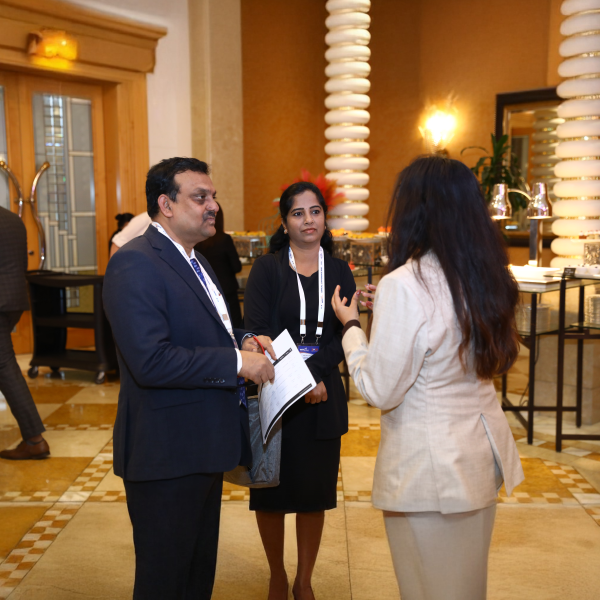
During the AGM, members engaged in roundtable discussions about collaborative problem-solving. Instead of operating as isolated nodes, members learned how to use the alliance to re-route cargo when unexpected bottlenecks occur. If a port in the Middle East experiences a sudden shutdown, a WTCalliance member has a trusted partner in an adjacent region ready to pivot the supply chain. This level of agility is impossible to achieve with unvetted, transactional agents found through standard freight events.
Beyond operational synergy, the AGM focused heavily on financial reciprocity. Members gained concrete strategies for implementing mutual credit terms, avoiding double-handling payments, and protecting against default risks. By establishing a closed-loop financial ecosystem, WTCalliance members reduce their exposure to bad debt and improve their cash flow, a critical advantage in the capital-intensive world of international shipping.
The modern logistics landscape is unforgiving. Independent freight forwarders can no longer afford risks associated with untested partnerships, nor can they waste resources on superficial networking avenues. The structural issues of isolation, financial vulnerability, and operational opacity require a fundamental solution.
The recent WTC Alliance's annual general meeting proved that there is a superior alternative to the fractured status quo. By replacing the guesswork for digital platforms and superficiality of standard trade shows with rigorous vetting, face-to-face accountability, and deep operational integration, WTCalliance has redefined how it means to be an independent forwarder. Attendees did not just quit with business cards; they left with a strategic global logistics network, shared financial safeguards, and strategic intellect necessary to scale their businesses securely. In a volatile world, the greatest asset a forwarder can possess is a trusted network, and that is what WTCalliance delivers.
You no longer need to navigate the challenges of international shipping in isolation or risk your reputation with unauthorized overseas agencies. It is time to grow your company, protect your margins, as well as gain access to a truly vetted, global network of elite logistics providers.
Discover the WTCalliance differences and apply for membership today to secure your spot in a network where trust is the foundation of every shipment.
Copyright © 2026 All Rights Reserved by WORLD TOP CARGO ALLIANCE LTD
Design and Developed by infinGlobal